

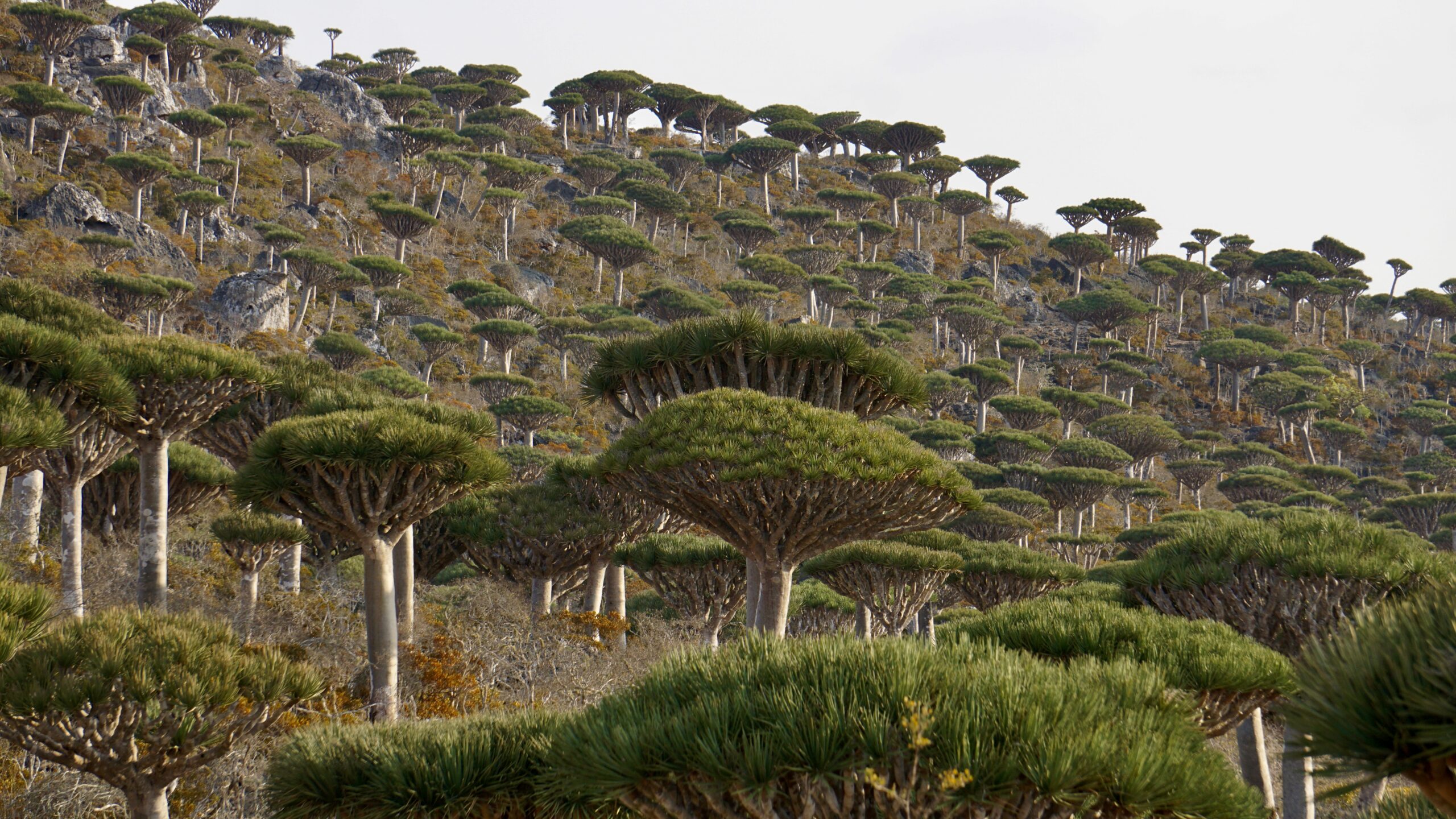

Socotra Island is not simply a destination—it is a journey into one of the most extraordinary landscapes on Earth. Rising from the Arabian Sea, this remote Yemeni archipelago is celebrated for its ancient landscapes, pristine beaches, dramatic mountains, endemic wildlife and the iconic Dragon Blood Trees. UNESCO inscribed the Socotra Archipelago as a World Heritage Site in 2008, recognizing its exceptional biodiversity and extraordinary level of endemism.
Why Visit Socotra?
Socotra feels wonderfully untouched. From mist-covered mountain forests and hidden freshwater pools to immense white-sand beaches, turquoise lagoons and windswept dunes, every journey reveals a different side of the island.
More than a third of Socotra’s plant species are endemic, while around 90% of its recorded reptile species are found nowhere else on Earth. Its marine environment is equally remarkable, making Socotra a destination for nature lovers, photographers, hikers, divers and adventurous travelers.
When to Visit Socotra
The main travel season generally runs from October to April, when conditions are more suitable for exploring the island, camping and enjoying its beaches and mountains. The summer monsoon brings stronger winds and rougher conditions, particularly along exposed coastal areas.
For the best balance of comfortable temperatures, clear skies and dramatic landscapes, October–December and February–April are especially attractive periods.
How to Get to Socotra
Travel to Socotra is unlike visiting a conventional tourist destination. Flights are limited and schedules can change, so international travelers should arrange their journey through an experienced Socotra tour operator that can coordinate flights, permits, visas and local transportation.
Current 2026 travel information indicates that access arrangements can vary, with limited international connections and schedules requiring advance coordination.
Visa & Permits
Most travelers to need to get a visa to enter Socotra. We will help to take care to arrange the visa for you. The government fixed the price at $200 for this season. We will request your tourist visa 3 weeks before your departure.
GCC nationals (Saudi, UAE, Qatar, Kuwait, Oman, Bahrain) do not need a visa.
Visa requirements :
- Copy of your passport
- Passport should valid for at least six months
Getting Around Socotra
Traveling around Socotra by public transportation is extremely not convenient and not possible as there is not car rental providers, and all iconic natural sites and touristic spots located in very remote areas of Socotra. Roads especially mountain roads are very rough and there is no other way to tackle them than transportation in a 4×4 Toyota Land Cruiser.
Where to Stay
Accommodation ranges from simple guesthouses in Hadibo to locally operated camps and beach camps in remote areas.
For the most memorable experience, spend several nights camping beneath Socotra’s extraordinary night skies, surrounded by mountains, beaches or wadis.
Things to Do in Socotra
- Hiking & Trekking — Explore the Hajhir Mountains, remote wadis and Dragon Blood Tree forests.
- Photography — Capture landscapes, endemic wildlife, traditional villages, beaches and extraordinary natural light.
- Wild Fishing — Experience Socotra’s rich coastline and traditional fishing culture.
- Swimming & Snorkeling — Discover crystal-clear waters, lagoons, reefs and secluded beaches.
- Cave Exploration – Explore Socotra’s hidden underground world, where ancient limestone caves reveal dramatic chambers, crystal formations, and traces of civilizations long past
- Cultural Experiences — Meet Socotri communities and experience traditions shaped by centuries of isolation.
- Camping — Sleep beneath spectacular stars in some of the island’s most remote landscapes.
Money & Connectivity
Cash is essential. ATMs and card facilities are limited, particularly outside Hadibo, so travelers should carry sufficient emergency cash in USD.
Internet and mobile connectivity can also be limited or unreliable in remote parts of the island. Treat the opportunity to disconnect as part of the Socotra experience.
Travel Insurance
Because Socotra is remote and travel logistics can be affected by weather or unexpected operational changes, comprehensive travel insurance is strongly recommended.
Your policy should specifically cover Yemen/Socotra, medical emergencies and evacuation, trip cancellation and interruption, and relevant transport disruptions. Always verify the policy directly with the insurer before departure.
The Best Way to Experience Socotra
Socotra is best experienced slowly. Rather than rushing from one attraction to another, allow time for sunrise over the mountains, swimming in a hidden wadi, sharing tea with a local family, walking through ancient Dragon Blood Trees and watching the stars emerge over a remote beach.
Come for the landscapes. Stay for the silence. Leave with a connection to a place unlike anywhere else on Earth
Comments +
Comments